Buyer's guide · 7 min read
Buying a San Leandro home with a built-in Sub-Zero? Inspect it first
Touring an Estudillo, Broadmoor or Bay-O-Vista home with an older built-in Sub-Zero? A pre-purchase inspection checklist and the repair-or-replace math for local buyers.
A built-in Sub-Zero is a fixture, not a free-standing appliance. When you buy a San Leandro home that came with one, you are inheriting a unit that may be a decade or two old, fitted into custom cabinetry, and worth several thousand dollars to replace. So before you fall for the kitchen, it pays to spend ten minutes finding out whether the refrigerator is a keeper or a future bill.
This is a buyer's and inspection guide, not a repair page. It walks through what you can check yourself during a showing or inspection window, how to read the warning signs, and how the repair-or-replace math actually works on a built-in here in San Leandro — from the Estudillo and Broadmoor flatland to the Bay-O-Vista hillside and the newer Heron Bay kitchens.
Start with the model and serial tag — how old is it really?
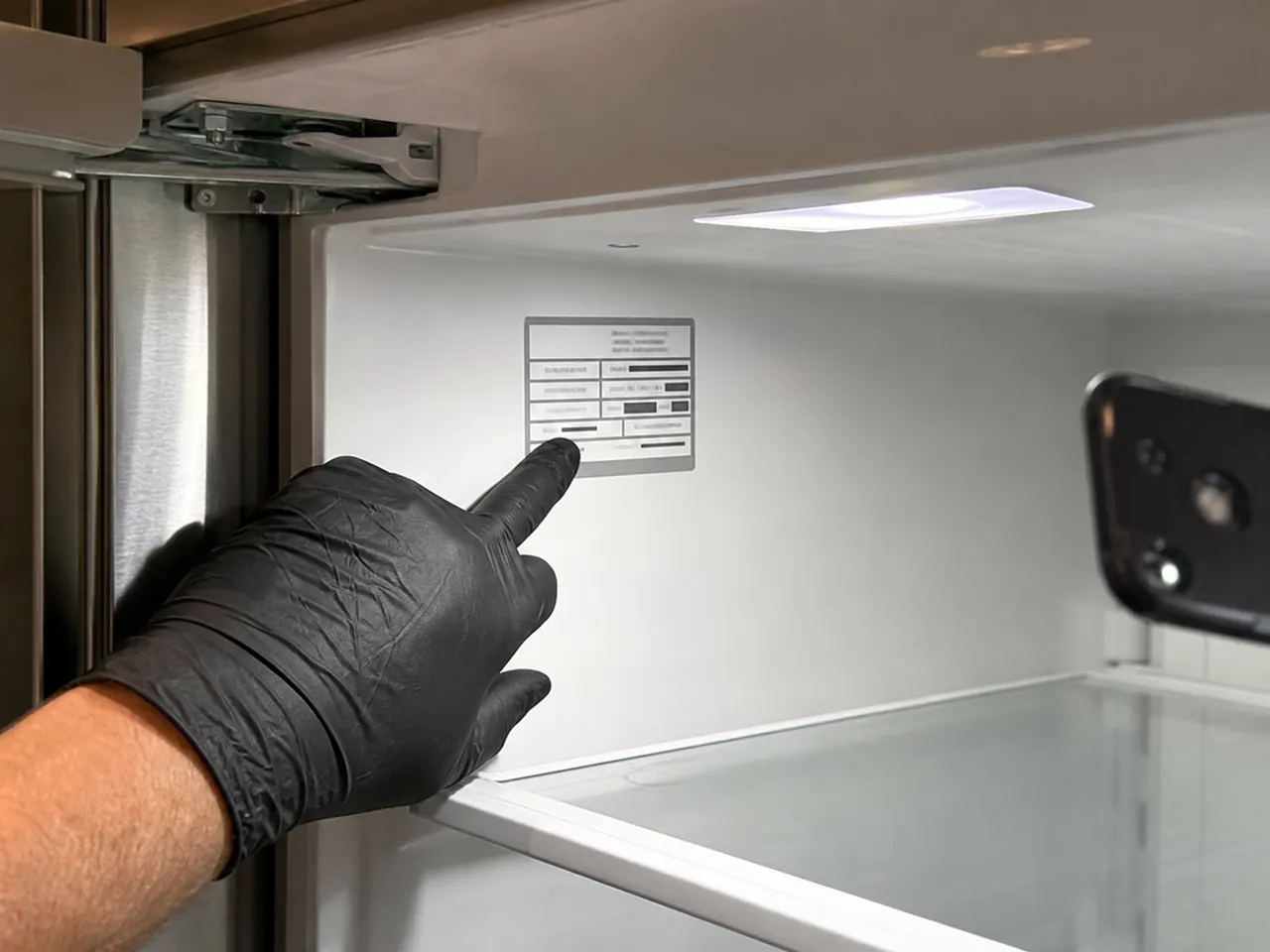
The single most useful thing you can do is find the model and serial tag. On most built-in Sub-Zero columns it sits on the upper interior side wall or behind the lower grille. The serial number encodes roughly when the unit was built, which tells you where it is in its service life. A well-kept built-in can run for decades, but parts availability and the odds of a sealed-system repair both shift as the unit passes the fifteen-to-twenty-year mark.
Photograph the tag. If you end up booking a model-number lookup or a diagnostic, that one photo lets us pre-check gaskets, fans, controls and ice-maker assemblies for that exact family before anyone visits — which matters in tight older San Leandro kitchens where the wrong part means a second trip.
The five-minute cooling and cabinet check
With the seller's permission, run a quick hands-on pass. Open both doors and feel the air: the fresh-food side should feel genuinely cold and the freezer hard-frozen, not merely cool. Put a slip of paper against the door and close it — if it pulls free with no drag, the gasket has relaxed and humid San Leandro air is leaking in.
Look at the back wall of the freezer for a heavy sheet of frost, listen for a fan that grinds or buzzes, and glance at the floor and the drip area for water. Each of those is a thread you can pull later: heavy freezer frost points to the defrost system, a puddle points to a drain or water-line leak, and a new buzz points to a worn fan bearing. None of these is automatically a deal-breaker, but each one belongs on your inspection list with a rough dollar figure attached.
Wine columns and drawers drift quietly
If the home has a Sub-Zero wine column or undercounter drawers — common in remodeled Broadmoor and Bay-O-Vista kitchens — check those too. A wine zone that reads several degrees off its setpoint, or drifts on a warm afternoon, often points to a sensor, a door seal or condenser load rather than a failed system. It is usually an affordable fix, but it is the kind of thing a seller's disclosure rarely mentions, so it is worth confirming yourself.
The repair-or-replace math on a built-in
Here is the part that trips up buyers: a built-in is not a $1,500 appliance you swap in an afternoon. Replacement can mean new panels, trim, and sometimes cabinet or flooring work to fit a current model into an older opening — so the real number is often far higher than the sticker on a showroom unit. That math tilts strongly toward repair for a single, verified fault.
Where replacement starts to win is when several major systems are failing at once, when parts for a very old family are scarce, or when the kitchen is already being gutted. For most San Leandro homes with one tired part — a gasket, a fan, a defrost heater, an ice-maker valve — a targeted repair keeps a genuinely premium refrigerator in service for far less than swapping the whole cabinet. Our repair-or-replace guide walks the decision in more detail.
What a paid diagnostic tells you before you close
If the five-minute check turns up anything, a paid pre-purchase diagnostic is cheap insurance against a four-figure surprise. A technician records actual temperatures, checks condenser airflow and the gasket, reads the frost pattern, and separates a small repair from a sealed-system problem with evidence rather than a guess. You walk into the negotiation knowing whether you are looking at a $400 gasket or a far larger job. Published San Leandro repair cost ranges give you the planning bands, and a cabinet-safe repair keeps the work front-accessible wherever possible so the millwork is not disturbed.
San Leandro housing stock, block by block
The neighborhood shapes what you are likely to find. Estudillo Estates-Glen and the Broadmoor District are full of older homes with custom openings and trim that does not tolerate a rushed pull-out, so cabinet-safe access is the watchword. Bay-O-Vista hillside kitchens add afternoon sun and tight remodels that can trap heat behind a built-in. Heron Bay and the newer Bayfair-area kitchens hide water fittings behind integrated panels, where a slow drip can run unseen.
Across all of them, the flatland's salt-damp marine air is the constant: it loads condenser coils, tires gaskets, and wears fan bearings a little faster than a dry inland climate would. A built-in that has been cleaned and serviced on that schedule is a real asset; one that has been ignored is a project. Ten minutes with the model tag and your own eyes is usually enough to tell which one you are buying.
FAQ
Questions & answers
Is an old built-in Sub-Zero worth keeping when I buy the house?
Usually yes, if the cabinet still fits well and only one system needs attention. Built-in replacement involves panels, trim and sometimes cabinet work, so a targeted repair on a verified fault almost always costs less than swapping the whole unit.
How can I tell how old the refrigerator is?
Find the model and serial tag — usually on the upper interior side wall or behind the lower grille — and photograph it. The serial encodes roughly when the unit was built, which is the best single clue to its remaining service life and parts availability.
Should I get a Sub-Zero inspected before closing?
If anything looks or sounds off during a showing, a paid pre-purchase diagnostic is worth it. It separates a small repair from a sealed-system problem with real evidence, so you can negotiate from facts instead of guesses.
What problems are most common in San Leandro built-ins?
The flatland's salt-damp bay air tends to surface tired door gaskets, clogged defrost drains, worn fan bearings and condenser loading sooner than a dry inland climate would. Most are affordable, single-part repairs rather than full failures.
Guides
More San Leandro guides
- Wolf oven not heating or holding temperature · 4 min Wolf Oven Not Heating or Holding Temperature: A San Leandro Owner's Guide Why a Wolf oven runs cold, overshoots, or throws an F-code in San Leandro: bake element, sensor, board, and the calibration to try before the $89 visit. Read the guide →
- Door Seal and Condensation · 6 min Sub-Zero Door Not Sealing and Sweating Inside? A San Leandro Guide Sub-Zero door not sealing and sweating inside in San Leandro? Learn how salt-damp bayside air wears out gaskets and what to check before you call for repair. Read the guide →
- Wine storage · 6 min Why a Sub-Zero wine column drifts warm in San Leandro A Sub-Zero wine column that creeps a few degrees warm is the classic San Leandro complaint. What the dual zones, the sealed system and the bay air are really telling you. Read the guide →
Rather leave it to a specialist?
Call or book a San Leandro diagnostic window
For active cooling loss, call first. For stable symptoms, use the online booking page.