
Wine storage · 6 min read
Why a Sub-Zero wine column drifts warm in San Leandro
A Sub-Zero wine column that creeps a few degrees warm is the classic San Leandro complaint. What the dual zones, the sealed system and the bay air are really telling you.
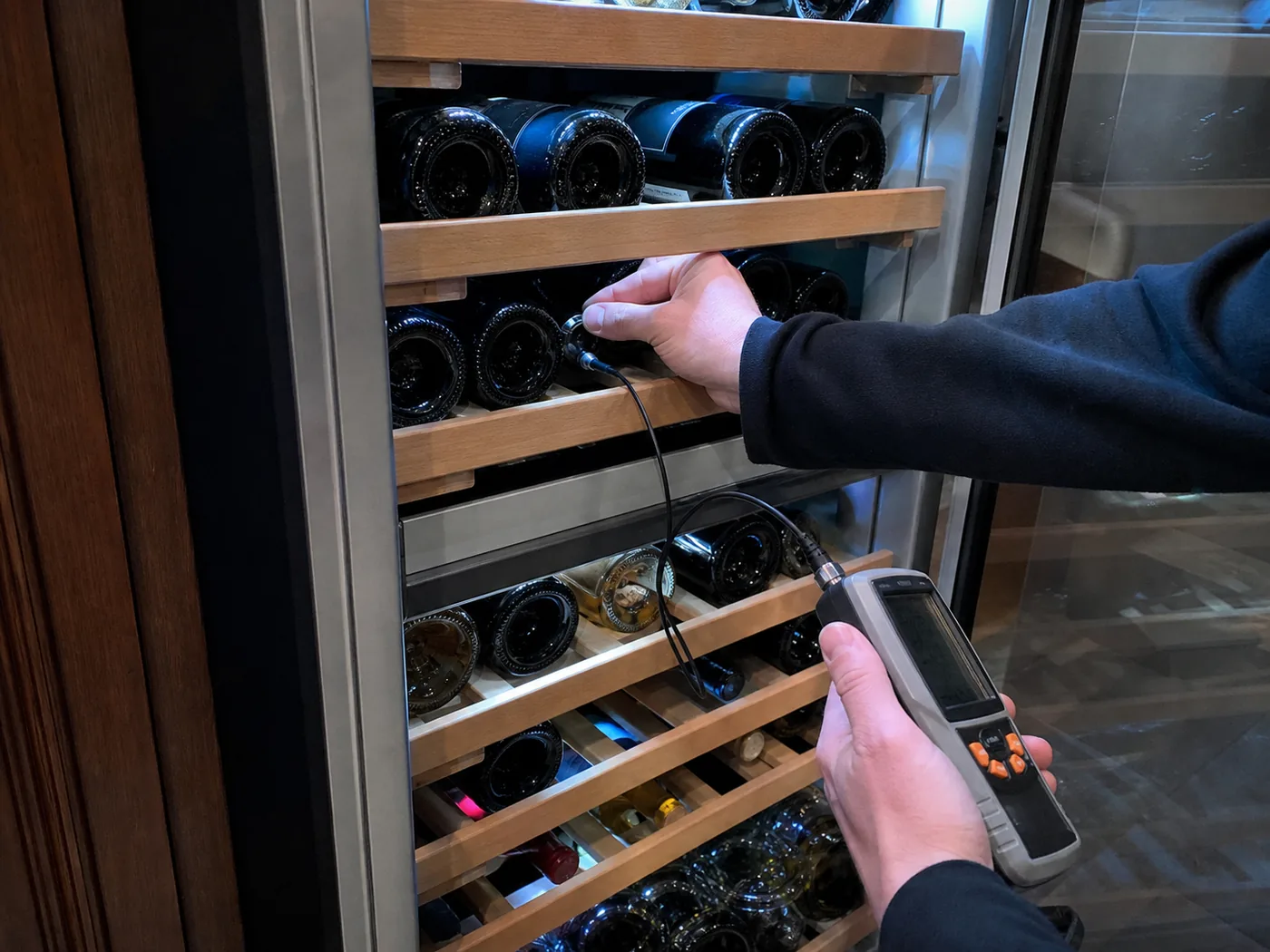
A wine column rarely fails loudly. The bottles do not spoil overnight; the unit just settles a degree or two off where it should sit, and a San Leandro collector with reds resting up in the Bay-O-Vista hills or whites in a Marina-edge kitchen notices the cellar reading creeping the wrong way. That slow drift, not a dead compressor, is the call we field most about Sub-Zero wine storage.
Sub-Zero builds genuine built-in wine columns and undercounter wine units — temperature-stable cabinets with a sealed refrigeration system, not a beverage cooler dressed up. Because they are precision boxes, the faults are precise too. Here is how a warm-drifting column reads in a San Leandro home.
Dual zones and the sensor that quietly fails
Most Sub-Zero wine columns run two independent zones — a cooler band for whites and sparkling, a touch warmer for reds — each governed by its own thermistor and damper. When one zone alone drifts while the other holds, the cabinet itself is fine; a single zone sensor has gone out of calibration and is feeding the control board a false reading.
That is one of the cleaner repairs in wine storage. We confirm it by comparing the displayed temperature against a calibrated probe in each zone, then swap the affected thermistor and let the column re-stabilize. It is worth catching early: a red zone that quietly climbs into the low 60s will not ruin a bottle in a week, but a San Leandro cellar built over years deserves the few degrees back.
The sealed system, airflow, and bay-air loading
When both zones drift warm together, attention moves to the sealed system and the airflow that feeds it. A wine column rejects heat through a condenser behind the lower grille, and San Leandro's flatland air — cool, salt-tinged and damp off the marshland — loads that coil faster than dry inland air would. A caked condenser makes the compressor run long and still lose ground, which shows up as a whole-cabinet warm drift on a humid August afternoon.
Clearing and vacuuming the coil is the first move and often the whole fix. If clean airflow does not settle it, we look at the evaporator fan and finally the refrigerant charge. A true sealed-system leak in a wine column is uncommon, but when it appears we put the gauge readings in front of you rather than guessing — the same way we approach a built-in refrigerator.
Seals, UV glass, vibration — and when to replace
Three quieter culprits round out the list. The door gasket on a wine column relaxes with age, and in San Leandro's foggy stretch a tired seal sweats and lets warm room air bleed in along the bottom corners. The UV-tinted glass door has its own perimeter seal that can fail and fog. And a column that has picked up a new buzz may have a worn compressor mount or fan bearing — worth fixing not just for the noise but because that vibration is steadily disturbing the sediment in your older reds.
Repair-versus-replace usually breaks cleanly. A sensor, a gasket, a fan or a coil cleaning is always worth doing on a built-in column. Only a failed compressor on an aging unit pushes us toward the replacement conversation, and we will show you the readings behind that call. Booking is by phone at (510) 390-9712 or online — no forms or email tag, and as an independent shop we recommend the fix that actually fits your column.
FAQ
Questions & answers
My Sub-Zero wine column reads a few degrees warm — is that urgent?
Not an emergency, but worth a look. A slow warm drift usually means a single zone thermistor has gone off-calibration or the condenser coil is loaded with San Leandro's damp bay air. Both are bounded fixes, and catching them early protects a cellar built up over years.
Does Sub-Zero actually make wine coolers, or is that Wolf?
Sub-Zero makes the wine storage — built-in wine columns and undercounter wine units with a real sealed refrigeration system and dual temperature zones. Wolf is the cooking side. We service the Sub-Zero wine units; it is genuinely on-brand for the line.
Is a warm wine column ever worth replacing instead of repairing?
Rarely. Sensors, gaskets, fans and a condenser cleaning are always worth doing on a built-in column. Only a failed compressor on an older unit moves us toward replacement, and we show you the gauge readings before recommending it.
Guides
More San Leandro guides
- Wolf oven not heating or holding temperature · 4 min Wolf Oven Not Heating or Holding Temperature: A San Leandro Owner's Guide Why a Wolf oven runs cold, overshoots, or throws an F-code in San Leandro: bake element, sensor, board, and the calibration to try before the $89 visit. Read the guide →
- Door Seal and Condensation · 6 min Sub-Zero Door Not Sealing and Sweating Inside? A San Leandro Guide Sub-Zero door not sealing and sweating inside in San Leandro? Learn how salt-damp bayside air wears out gaskets and what to check before you call for repair. Read the guide →
- Buyer's guide · 7 min Buying a San Leandro home with a built-in Sub-Zero? Inspect it first Touring an Estudillo, Broadmoor or Bay-O-Vista home with an older built-in Sub-Zero? A pre-purchase inspection checklist and the repair-or-replace math for local buyers. Read the guide →
Rather leave it to a specialist?
Call or book a San Leandro diagnostic window
For active cooling loss, call first. For stable symptoms, use the online booking page.